

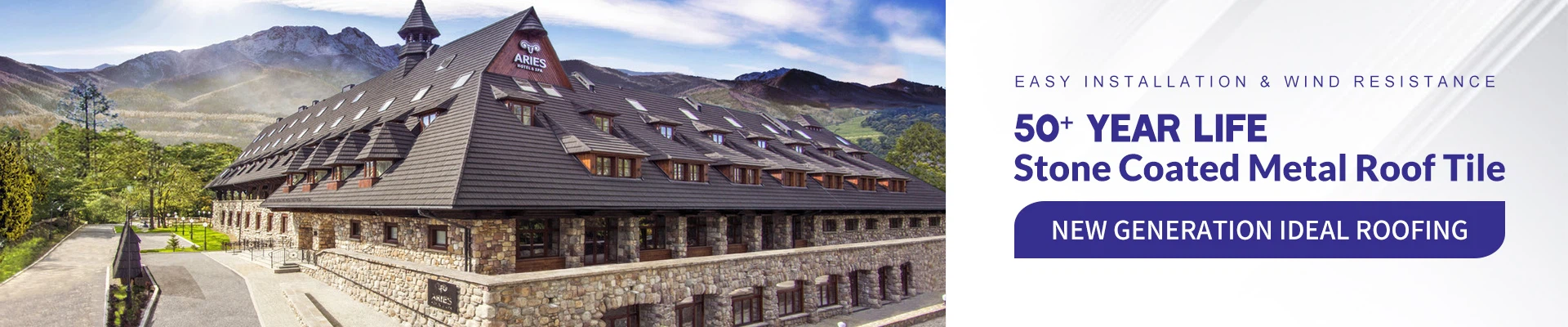
The Reason Why The Colored Stone Metal Tiles Were Blown Off By The Wind
Apr 14, 2023
Leave a message
Colored stone metal tiles are a type of roof building material, and now more and more buildings are using this emerging roof building material. The quality of the roof is one of the important factors determining the service life of a building. So it is necessary to ensure the quality of colored stone metal tiles. The colored stone metal tiles with qualified quality and standardized construction will not be blown off by the wind. Below, we will introduce the reasons and countermeasures for some of the colored stone metal tiles being blown off by the wind.
1. The influence of construction season on the firmness of colored stone metal tiles
At present, the fixation method of colored stone metal tiles is mainly based on double-layer nail adhesive fixation. During winter construction, especially for single-layer colored stone metal tiles, due to their thin thickness, light weight, and weak tear resistance, the self-adhesive adhesive on the colored stone metal tiles almost has no effect. They are all fixed by nails, and if exposed parts of the tiles are blown by strong winds, it is inevitable that they will fall off.
2. The impact of sandstorms and strong winds in March and April on colored stone metal tiles
In the case where the self-adhesive adhesive of the colored stone metal tile has not yet taken effect, if the self-adhesive adhesive is blown into the tile by sand and dust, its adhesion will be greatly reduced. After multiple frequent blows by the wind, the tile will fall off after being broken by the wind. When installing colored stone metal tiles in the south, one is afraid of the northwest wind in winter. If the self-adhesive adhesive does not work after installation, it is easy to blow and drop the tiles.
3. The quality of the nail holding layer is not up to standard
After on-site inspection, it was found that there were cement mortar with a low grade, and there were also cases where the thickness of the nail layer on the upper layer of the insulation board was severely insufficient, the pouring and compaction were not solid, large areas of cracking, and the edge opening was shelled out. Nails were not firmly nailed, and if people walked on the tile, the nails would become loose. When encountering strong winds, the nails would be rolled up or dropped together.