

What is the Best Roof for Schools and Universities?
May 08, 2024
Leave a message
What is the Best Roof for Schools and Universities?
NEW GENERATION IDEAL ROOFING

Today's topic is about finding the best roofs for schools and colleges.
We'll discuss how to choose a durable roof that meets your school's aesthetic, financial, and operational goals. Can reduce operating costs by up to 50% and ensure decades of high performance and worry-free protection.
Additionally, we'll explore current roofing trends, such as the surge in demand for metal roofs in schools, from local community schools to world-renowned universities and more.
When looking for the best roof for your school or college, you need to pay attention to the following points:
1. The importance of choosing a roof that is long-lasting and durable.
2. The roof is consistent with campus and community buildings.
3. Low maintenance roof, as easy as A-B-C.
4. Benefits of energy-saving roofs.
The Importance of Choosing a Durable and Long-Lasting Roof
Whether you need to replace an old roof or are exploring options for a new campus building, finding a roof that is durable and long-lasting is crucial. Our goal is to install a roof that requires minimal maintenance and provides decades of worry-free protection.
Poor quality roofs often lead to ongoing problems and frequent repairs. These hidden costs are expensive and can be extremely damaging to the learning environment.
The durability of a roofing material is directly related to its service life. High-performance roofing materials that can withstand the elements will have a longer life because they require less maintenance and repairs.
Remember the old saying, "You get what you pay for"?
While some roofing materials are less expensive to install, they cost more in the long run because they require frequent repairs and replacements.
Take asphalt shingles, for example. As the cheapest roofing material on the market, asphalt shingles have the shortest lifespan of all roofing materials, requiring replacement every 12 years.
On the other hand, roofing materials such as metal roofing are slightly more expensive to install but have an average lifespan of 40-70 years due to their industrial-strength durability.
Metal roofs can withstand just about anything Mother Nature throws at them, including:
Fire Resistance: Metal is a non-combustible material with the highest fire resistance rating.
Hail: Metal roofs are known to withstand the impact of hail and storm debris and have the highest hail impact rating.
Hurricanes: Stone coated metal roofs are designed to withstand hurricanes and are approved for use in high-velocity hurricane zones.
Snow/Ice: Metal roofing is non-porous and resists deterioration caused by expansion caused by freeze-thaw cycles, preventing the formation of ice dams.
Resist earthquakes: Earthquakes can cause huge property losses, mostly due to the structure of the roof and the weight of the tiles. Lightweight metal tiles can reduce the weight of the building structure. Therefore, it has good resistance to strong earthquakes.
Repeatable construction: Because the colored stone metal tiles are lightweight, they will not put heavy pressure on the building. As long as the hanging tile strips are fixed, any roof can be re-constructed on the original roof tiles. On the contrary, cement tiles and clay tiles are very heavy, so repeated construction will cause great dangers in natural disasters such as earthquakes and strong winds.
Simple construction: Because colored stone metal tiles are lightweight and easy to cut, they are suitable for buildings of various shapes, especially for safe construction on large-slope roofs or high-rise buildings. They are a veritable high-tech roofing material. Better fit and adhesion, so it won't fall off in extreme weather.
While the durability of a metal roof is hard to beat, you might think it's too industrial for campus buildings.
This is where the stone-coated metal roof that I'm going to introduce to you next comes into play.
Roofing that Aligns with Campus and Community Architecture
While the industrial strength of metal roofing is ideal for schools and universities, the industrial look of some metal roofing products - such as color steel tiles and aluminum roofing tiles - conflicts with campus architecture.
Fortunately, there is one metal roofing product that offers industrial-strength durability without the industrial aesthetic: stone-coated metal roofing.
Stone coated metal roofing is made from high-grade steel panels that are coated with natural stone particles. This process transforms steel panels into one of the most versatile roofing materials on the market.
Available in a variety of colors and textures, stone coated metal roofs replicate the look of traditional roofing materials such as asphalt shingles, clay tiles, and wood shake boards without sacrificing durability.

The design versatility of stone coated metal roofing can adapt to any architectural style. This is an important consideration for universities where roofing materials must be consistent with campus architecture.
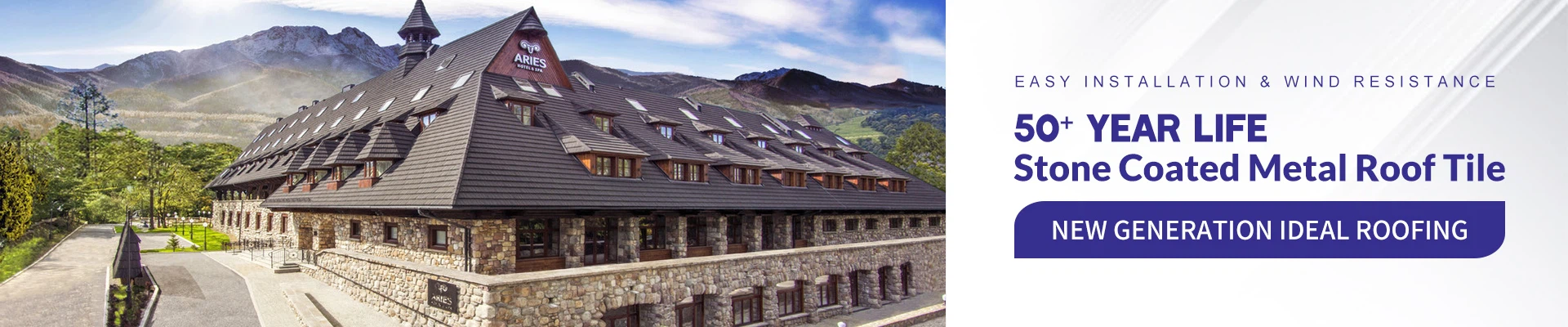
JHL ROOF villa tile is a metal tile roof coated with stone, which can be perfectly combined with various buildings in the university. The stone-coated metal roof not only met the school's aesthetic requirements, but also met their requirements for a durable, long-lasting and low-maintenance roof.
Low-Maintenance Roofing That's as Easy as A-B-C
Frequent roof repairs and maintenance are expensive, disrupt the learning environment and often require temporary building closures. A low-maintenance roof will eliminate the headache of ongoing maintenance and can significantly reduce operating costs.
For example, educational facilities using metal roofs save 35% to 50% on maintenance and upkeep costs compared to roofing materials that require annual maintenance.
To ensure you choose a low-maintenance roof for your school or university, look for a roofing material that is:
Non-porous, resistant to water and moisture penetration.
Porous roofing materials, such as wood shingles and asphalt shingles, can be penetrated by water and moisture. This can lead to rot, mold, and damage-all of which require ongoing repairs and maintenance. Nonporous roofing materials, on the other hand, will resist water and moisture penetration and eliminate the need for ongoing maintenance and treatment.
Resistant to UV degradation.
Low-quality roofing materials, especially asphalt shingles, can degrade from prolonged exposure to the sun's ultraviolet radiation. UV radiation can cause shingles to crack and split, requiring frequent and ongoing maintenance. If your school or college is in an area prone to strong sunlight, you'll want a roof that resists UV rays.
Easy to clean and does not require regular handling.
Low-maintenance roofs typically only require a basic flush with water and a mild cleaning solution every one to two years. Remember, it's best to avoid delicate roofing materials. For example, clay tile roofs are so fragile that walking on them can cause cracks and damage even during annual cleanings. Shake wood flour is also high maintenance as they require chemical treatment every six months to prevent rot, mold growth and insect infestation.
Benefits of Energy-Efficient Roofing
Energy-efficient roofs have significant benefits for educational facilities, especially considering that 30% of a school's energy consumption is unnecessary or inefficient.
Energy-efficient roofs can reduce cooling costs by up to 40%, but the benefits go beyond cost savings. A 2023 study by The Princeton Review found that 70% of students applying to college consider a school's environmental commitments and sustainability goals before deciding to apply.
If energy efficiency and sustainability are priorities, metal roofs are the way to go.
Metal roofing is one of the most energy-efficient roofing materials on the market. Metal roofing is also 100% sustainable and can be recycled at the end of its life.
Asphalt shingles, on the other hand, may not be the best choice. Away from buildings, asphalt shingles absorb heat from the sun like sponges.
Not only are asphalt shingles one of the least energy-efficient roofing materials, they are also incompatible with solar panels. With over 7,300 schools and universities using solar energy, you may want to consider your roof's compatibility with solar panels when evaluating different roofing options.
If your school or university plans to use solar energy in the future, it's best to choose a roof that will last a long time. Solar panels can easily last over 25 years, which means the roof underneath the panels needs to last just as long. Considering that asphalt shingles need to be replaced every 12 years, they will need replacing even more than solar panels. This process requires dismantling and reinstalling the entire solar system. Not only is this process expensive and destructive, it can also damage solar panels.